
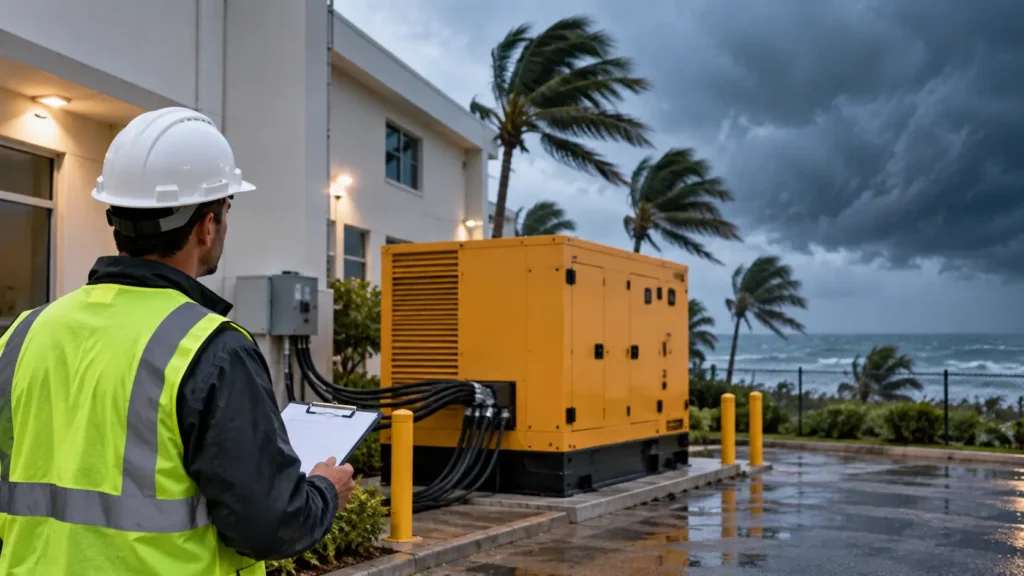
Hurricane season can create power disruptions that affect facilities, public services, communications, water systems, businesses, and emergency operations. When utility service is interrupted, organizations may need to shift quickly to temporary power and alternate operating procedures.
The strongest response usually begins before the storm. Emergency power planning gives teams time to identify critical loads, review site conditions, confirm equipment requirements, coordinate fuel, and establish responsibilities before normal access and supply channels become more difficult.
This guide outlines a practical approach to planning temporary power before hurricane season and preparing for the transition from emergency operations back to recovery.
Why Emergency Power Planning Should Start Before a Storm
Power planning during an active emergency is often affected by incomplete information, changing weather, blocked roads, competing priorities, and limited time. Preparing in advance does not remove uncertainty, but it gives the response team a clearer starting point.
Advance planning can help organizations:
- Identify which facilities and functions require priority support
- Document equipment, connection, and placement requirements
- Confirm delivery access and unloading areas
- Establish contacts for facility, emergency, technical, and logistics teams
- Plan fuel storage, delivery, monitoring, and replenishment
- Define communication and escalation procedures
- Prepare a transition and demobilization process
The plan should be practical enough to use during a fast-moving event and flexible enough to adapt as conditions change.
1. Identify Critical Sites and Essential Functions
Emergency power planning begins with understanding what must remain operational. Not every room, system, or building will have the same priority. The organization should identify the locations and functions that support safety, continuity, public service, communications, facility operations, or emergency response.
Possible priorities may include:
- Emergency operations or command locations
- Shelters and support facilities
- Medical or public-service operations
- Water and wastewater systems
- Communications and technology systems
- Refrigeration or other critical equipment
- Security, access, and life-safety systems
- Field or recovery operations
For each site, document the responsible facility contact, essential functions, expected operating requirements, and the consequences of losing power.
2. Document Site and Electrical Requirements
Temporary power equipment must be compatible with the site it is intended to support. Before hurricane season, facilities should gather the information that equipment and technical teams will need.
Confirm the Expected Load
Identify the equipment and systems that must be supported and how they are expected to operate. The goal is to distinguish priority loads from systems that can remain offline or operate on a reduced schedule.
Review Connection Requirements
Document available connection points, distribution equipment, cables, transfer arrangements, grounding requirements, and the personnel responsible for confirming the connection. Qualified personnel should review the site-specific approach and applicable procedures.
Confirm Placement Conditions
Temporary generators and related equipment need an appropriate location. Review ground conditions, access, ventilation, clearances, weather exposure, security, traffic movement, fuel access, and distance from the facility or connection point.
Record Site Information in a Usable Format
Site notes should be easy to find when the response begins. A useful record can include photographs, diagrams, access instructions, contact details, equipment requirements, safety information, and alternate arrangements.
3. Plan Temporary Generator Support
Temporary generators are one possible part of an emergency power strategy. The equipment should be selected and configured around the operating need, site conditions, and available support.
Planning should consider:
- Expected electrical requirements
- Priority loads and operating schedule
- Generator placement and access
- Distribution and connection equipment
- Fuel type, storage, and resupply
- Monitoring and maintenance responsibilities
- Weather protection and site safety
- Transportation and unloading requirements
The generator itself is not the entire temporary power solution. Cables, distribution, connection, fuel, qualified technical support, and communication all contribute to a workable deployment.
4. Build a Fuel and Resupply Plan
Fuel should be planned at the same time as temporary power. A generator that reaches a site without a clear fuel-support process may be difficult to sustain during an extended outage.
The fuel plan should identify:
- Equipment and vehicles that require fuel
- Expected operating patterns
- Storage and handling requirements
- Delivery access and unloading locations
- Supplier and transportation contacts
- Monitoring and documentation responsibilities
- Replenishment triggers
- Alternate arrangements if routes or supplies change
Fuel planning should follow site requirements, applicable procedures, and qualified guidance. It should also account for security, spill prevention, traffic, weather exposure, and emergency access.
5. Review Transportation and Site Access
Hurricanes can affect roads, bridges, traffic patterns, facility entrances, and unloading areas. A delivery address alone may not provide enough information for a generator or fuel vehicle to reach the correct location.
Before the season begins, confirm:
- Primary and alternate routes
- Actual facility entrance
- Vehicle clearance and turning space
- Unloading and equipment placement areas
- Ground and drainage conditions
- Access controls and security procedures
- Contacts who can direct the final approach
- Locations where resources can be staged if the site is not ready
Review these details again when a storm is approaching. Conditions may change after the original plan was documented.
6. Establish Communication and Responsibilities
Emergency power deployments usually involve several parties. The plan should make it clear who requests equipment, who approves the response, who receives the equipment, who manages the site, who confirms technical requirements, and who coordinates fuel and transportation.
Create a contact list that includes:
- Facility and property representatives
- Emergency-management contacts
- Government or public-sector partners, when applicable
- Electrical and technical personnel
- Equipment and logistics providers
- Transportation and fuel contacts
- Safety and security personnel
- Leadership or escalation contacts
Define how updates will be shared when site conditions, routes, loads, fuel needs, or priorities change. A concise status format can help teams communicate what has been dispatched, what has arrived, what is operational, and what remains outstanding.
7. Prepare for Operations During the Outage
Power planning should include the period after equipment arrives. Teams need to understand how the site will operate while temporary power is in use.
Consider:
- Who will monitor the equipment and site conditions?
- How will fuel levels and resupply needs be tracked?
- Who can request technical assistance?
- How will nonessential loads be managed?
- What happens if the load changes?
- How will weather, security, and access be monitored?
- How will operating issues be documented and escalated?
This operational plan should be simple enough to use under pressure and clear enough for people who may join the response after the initial setup.
8. Plan for Recovery and Demobilization
Emergency power planning should include the end of the deployment. A temporary generator may be needed until utility service returns, permanent repairs are complete, or the site moves to another operating arrangement.
Before equipment is removed, the responsible contacts should confirm:
- The next operating arrangement is ready
- Temporary power is no longer required or will be replaced
- Shutdown and disconnection responsibilities are clear
- Equipment, fuel, cables, and accessories are accounted for
- Condition and outstanding issues are documented
- The site is ready for transport and restoration
Planning demobilization early helps avoid confusion when the emergency phase begins to wind down.
9. Test and Update the Plan Before Hurricane Season
An emergency plan is more useful when the people who will use it understand it. Before the season begins, review the site information, contacts, access instructions, equipment requirements, fuel plan, communication process, and recovery steps.
Look for changes such as:
- New facilities or changed priorities
- Construction or access changes
- Updated contact information
- Changed electrical or facility requirements
- New equipment or operating procedures
- Revised supplier or transportation arrangements
- Lessons from previous storms or outages
A short review can reveal gaps that are harder to solve during an active emergency.
How Rapid Emergency Deployment Supports Emergency Power Planning
Rapid Emergency Deployment focuses on practical emergency-response needs, including temporary power, equipment deployment, logistics, field operations, and coordination for critical situations.
For organizations preparing for hurricane season, the planning process can connect site requirements with equipment, transportation, fuel, communication, field support, and recovery considerations. A clear plan helps teams discuss the actual operating need before a storm creates additional pressure.
If your organization is reviewing emergency power requirements before hurricane season, contact Rapid Emergency Deployment to discuss critical sites, temporary power considerations, access, fuel planning, and response coordination.
Conclusion
Emergency power planning is most valuable before an outage occurs. By identifying critical sites, documenting requirements, reviewing access, preparing fuel support, assigning responsibilities, and planning recovery, organizations can create a more coordinated response to hurricane-related power disruption.
The plan does not need to predict every detail of a storm. It needs to provide a clear structure for decisions, communication, equipment deployment, temporary operations, and the transition back to recovery.
Frequently Asked Questions About Emergency Power Planning
What is emergency power planning?
Emergency power planning is the process of preparing for power interruptions by identifying critical sites and loads, documenting temporary power requirements, coordinating equipment and fuel, establishing responsibilities, and planning operations and recovery.
When should emergency power planning begin before hurricane season?
Planning should begin before a storm threatens the area so teams have time to review site requirements, confirm contacts, inspect access, coordinate equipment and fuel, and address gaps before conditions become more difficult.
Which facilities may need temporary power during a hurricane?
Potential priorities may include emergency operations, shelters, medical or public-service activities, water systems, communications, security systems, and other facilities whose operations are important to safety or continuity.
What information is needed before deploying a temporary generator?
Teams should understand the expected load, priority systems, connection requirements, placement area, access route, unloading conditions, fuel needs, responsible contacts, and site-specific safety or operating procedures.
Why is fuel part of emergency power planning?
Temporary generators depend on fuel to operate. A fuel plan should address storage, delivery, monitoring, replenishment, access, handling, documentation, and changing conditions throughout the deployment.
How can organizations prepare generator delivery access?
Organizations can document primary and alternate routes, facility entrances, clearance, turning space, unloading areas, ground conditions, access controls, staging locations, and contacts who can direct the final delivery.
Who should be included in an emergency power plan?
The plan may include facility representatives, emergency managers, government or public-sector partners, technical personnel, equipment and logistics providers, transportation and fuel contacts, safety teams, security personnel, and leadership contacts.
What should happen after temporary power is installed?
The team should monitor equipment and site conditions, track fuel, manage priority loads, communicate status, document issues, coordinate support, and adjust the operating plan as requirements change.
How should temporary power be removed after an outage?
The site and response contacts should confirm the next operating arrangement, coordinate shutdown and disconnection, account for equipment and fuel, document condition, and prepare the resources and site for demobilization.