
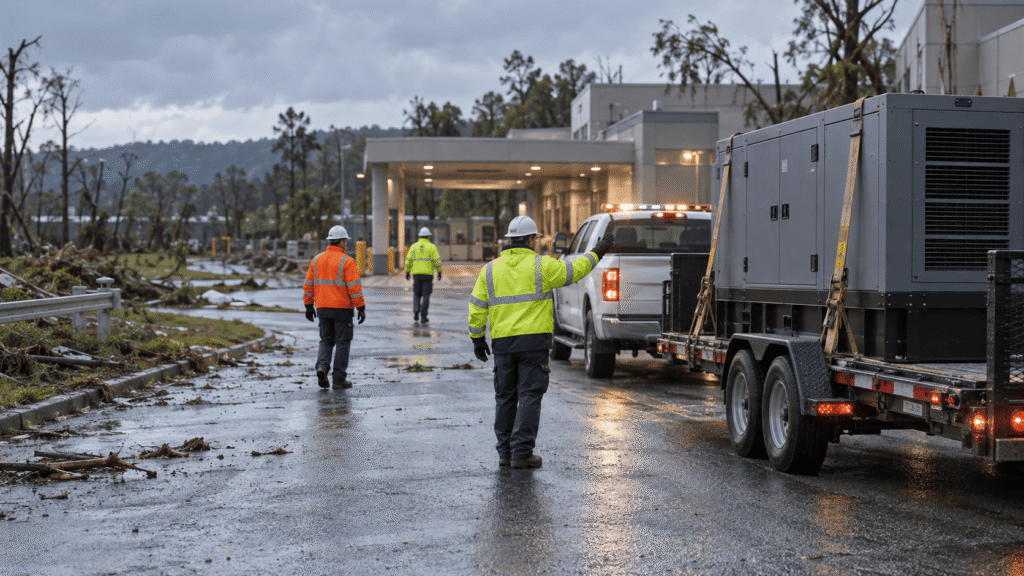
In a disaster response, equipment may be ready, personnel may be assigned, and transportation may be available—but the deployment can still stall if the receiving site cannot be reached or used safely.
Emergency site access connects the delivery route with the actual operating location. It involves more than identifying an address. Teams may need to confirm roads, bridges, entrances, clearances, turning space, ground conditions, unloading areas, security procedures, and the people responsible for directing the final approach.
This planning matters when moving generators, fuel, vehicles, distribution equipment, tools, and other critical resources into an area affected by storms, flooding, debris, infrastructure damage, or restricted access.
Why Emergency Site Access Matters
Disaster conditions can change the physical path to a site. Roads may be blocked, bridges may be restricted, traffic patterns may change, or an entrance that was normally available may become unusable. Even when a vehicle reaches the property, the equipment may still have nowhere suitable to unload or operate.
Poor access planning can create problems such as:
- Vehicles arriving at an unusable entrance
- Equipment being delivered to the wrong location
- Insufficient space for turning or unloading
- Unsafe ground or drainage conditions
- Delays caused by access controls or missing contacts
- Fuel vehicles being unable to reach storage or transfer points
- Equipment being placed too far from the required connection point
- Field teams working from outdated route information
Planning emergency site access in advance helps connect the logistics plan with the conditions at the destination.
What Emergency Site Access Planning Includes
Access planning should be based on the equipment, vehicle, facility, and operating conditions involved. A route that works for a small support vehicle may not work for a fuel truck or a large portable generator.
Key elements include:
- Primary and alternate routes
- Road, bridge, and clearance information
- Facility entrances and access controls
- Vehicle dimensions and turning requirements
- Unloading and staging areas
- Ground, drainage, and surface conditions
- Equipment placement and connection distances
- fuel delivery and storage access
- Site security and traffic coordination
- Receiving contacts and handoff procedures
- Communication for route or site changes
The plan should be practical enough for a driver, field lead, facility representative, and logistics coordinator to use consistently.
1. Start With the Actual Operating Location
The location in a work order or delivery request may not describe the exact point where equipment needs to be placed. Before movement, the response team should identify the usable entrance, the route from the entrance to the operating area, and the location where the equipment will be unloaded or connected.
Useful site information may include:
- Street address and facility name
- GPS coordinates or a clearly marked map
- Preferred entrance and gate instructions
- Physical landmarks
- Restricted or alternate entrances
- Contact responsible for directing arrival
- Equipment placement area
- Distance to the connection point
- Space needed for service and maintenance
Clear site information reduces the risk of a successful delivery to the wrong part of the property.
2. Review Routes for Disaster Conditions
Normal route information may not be enough after a storm or other disaster. Teams should review the expected travel path for conditions that could affect heavy vehicles, fuel delivery, equipment transport, and emergency access.
Check road and bridge conditions
Road closures, flooding, debris, damaged bridges, low clearances, construction, and weight restrictions can change the usable route. When conditions are uncertain, the team should verify the route with reliable local or response contacts before dispatch.
Identify alternate routes
An alternate route should be practical, not simply a second line on a map. It should account for vehicle size, clearance, turning space, access controls, travel conditions, and the final approach to the site.
Recheck conditions before movement
Conditions may change between planning and dispatch. The route should be reviewed again when a storm approaches, after a major weather change, or when the receiving site reports a new access issue.
3. Match the Route to the Equipment
Different resources create different access requirements. A vehicle carrying a portable generator may require more clearance and unloading space than a standard delivery vehicle. A fuel vehicle may require a safe approach to a storage or transfer location. Cables and distribution equipment may require the generator to be positioned closer to a connection point.
Before dispatch, confirm:
- Vehicle and equipment dimensions
- Total weight and loading arrangement
- Required clearance and turning space
- Unloading method
- Equipment placement area
- Distance to the facility or connection point
- Space for service, fuel, and safe movement
- Whether more than one vehicle must access the site
Matching the route to the resource helps avoid preventable problems at the final approach.
4. Plan Entrances, Gates, and Security
Access may depend on more than road conditions. A facility may have gates, check-in procedures, security requirements, restricted hours, or a designated receiving point.
The response plan should document:
- Gate and entrance locations
- Access codes or authorization procedures, when appropriate
- Security and identification requirements
- Delivery windows or check-in instructions
- Vehicle staging areas
- Site contact and backup contact
- Traffic or escort requirements
- Instructions for after-hours arrival
These details should be shared with the transportation and field teams before movement, and updated if facility operations change during the response.
5. Confirm Unloading and Equipment Placement
The site must have a workable area for unloading and placing the equipment. Space that appears available on a map may be blocked by debris, vehicles, standing water, construction, or ongoing emergency activity.
Review ground and drainage conditions
Heavy equipment requires a suitable surface and adequate access. Teams should consider standing water, soft ground, slopes, drainage, surface stability, and the effects of additional rain or weather.
Protect movement areas
Equipment placement should allow room for personnel, cables, service access, fuel support, and other site activity. The area should also be considered in relation to vehicle traffic, public access, security, ventilation, and emergency egress.
Coordinate placement before arrival
The receiving site and field team should agree on the intended placement area before the vehicle arrives. If the location is no longer usable, the team should identify the change and a workable alternative.
6. Coordinate Fuel and Temporary Power Access
Emergency site access affects more than the initial equipment delivery. Temporary power deployments may require fuel resupply, technical support, maintenance access, and the movement of additional equipment.
The access plan should consider:
- Generator placement and connection distance
- Cable and distribution routes
- Fuel storage and delivery access
- Space for service and inspections
- Vehicle movement around the equipment
- Weather protection and drainage
- Security and protection from traffic
- Access for later removal or relocation
Planning these needs together helps prevent a generator from being placed where it cannot be supported after installation.
7. Establish a Staging and Handoff Process
Staging can provide a controlled location when the final site is not ready or when several resources need to be coordinated. It may also help the team adjust to changing routes, site priorities, and access restrictions.
A staging plan should identify:
- Where vehicles wait before final delivery
- Who confirms that the site is ready
- How the final movement is authorized
- How equipment is checked and documented
- Who directs unloading and placement
- How access changes are communicated
- What happens if the delivery cannot proceed
The handoff should record what arrived, where it was placed, who received it, and what support remains outstanding.
8. communicate changes quickly
Access information is only useful while it is current. A blocked road, closed gate, changed delivery location, or unsafe unloading area should be communicated to every team affected by the change.
Useful access updates should identify:
- The location affected
- The specific restriction or hazard
- The current impact on the deployment
- The alternate route or action, if known
- The person responsible for the decision
- The next expected update
Clear communication helps transportation, staging, facility, fuel, and field teams avoid working from conflicting instructions.
9. Plan Access During Sustained Operations
Access requirements continue after the first delivery. Teams may need to move fuel, service equipment, replacement resources, personnel, or additional supplies to the site while temporary operations continue.
During sustained operations, review:
- Changes in road or weather conditions
- Fuel delivery access
- Maintenance and inspection routes
- Security and traffic movement
- Space around generators and equipment
- Access for additional vehicles
- Transition and demobilization routes
The route that worked for the initial delivery may not be suitable for later support activity.
10. Plan Demobilization and Site Restoration
Equipment removal requires access planning as well. Before demobilization, the team should confirm the next operating arrangement, shutdown and disconnection responsibilities, loading space, transportation route, site condition, fuel handling, and final handoff.
The closeout process should document equipment condition, damage, remaining accessories, fuel, site issues, and any restrictions that could affect future movement. A well-planned exit helps the site return to its next phase of operation without creating a new access problem.
Common Emergency Access Mistakes to Avoid
Organizations can reduce avoidable issues by watching for these common gaps:
- Treating the street address as the complete delivery plan
- Failing to account for vehicle size or weight
- Not confirming the actual unloading area
- Relying on a single route without an alternative
- Forgetting gate, security, or after-hours procedures
- Ignoring ground, drainage, and clearance conditions
- Placing equipment without planning fuel and service access
- Failing to update teams when the route changes
- Planning delivery but not removal or demobilization
These problems are often discovered late because access planning is separated from equipment and site planning. Bringing them together earlier creates a more practical response.
Building an Emergency Site Access Checklist
Before hurricane season or another high-risk period, organizations can prepare a site access record that includes:
- Facility name and address
- Primary and alternate entrances
- Map, coordinates, and landmarks
- Route and bridge information
- Vehicle clearance and turning requirements
- Gate and security procedures
- Unloading and staging locations
- Ground and drainage notes
- Equipment placement and connection details
- Fuel and service access
- Receiving and backup contacts
- Communication and escalation procedures
- Demobilization route and site restoration notes
Review the checklist when facilities, roads, construction, equipment, or contacts change.
How Rapid Emergency Deployment Supports Site Access Planning
Rapid Emergency Deployment focuses on practical emergency-response needs, including temporary power, equipment deployment, logistics, field operations, and coordination for critical situations.
Site access is part of each of those activities. It affects how equipment is transported, where resources are staged, how generators and fuel are supported, how field teams coordinate, and how equipment is eventually removed.
If your organization is preparing for a possible disruption or coordinating an active emergency response, contact Rapid Emergency Deployment to discuss site requirements, access conditions, equipment movement, temporary power, fuel support, and field coordination.
Conclusion
Emergency site access is a core part of disaster response logistics. A delivery address is only the starting point. Teams must understand the route, entrance, equipment requirements, unloading area, site conditions, support access, communication process, and recovery route.
By planning access before an emergency and reviewing it as conditions change, organizations can create a more coordinated path for critical equipment to reach the people and facilities that need it.
Frequently Asked Questions About Emergency Site Access
What is emergency site access planning?
Emergency site access planning is the process of reviewing routes, entrances, clearances, unloading areas, ground conditions, security procedures, equipment placement, and communication requirements before moving critical resources to a disaster site.
Why is a delivery address not enough during disaster response?
A delivery address may not identify the usable entrance, final operating location, unloading area, route restrictions, turning space, or person responsible for directing the equipment after arrival.
What should be checked before transporting critical equipment?
Teams should check road and bridge conditions, vehicle size and weight, clearance, turning space, access controls, unloading conditions, ground stability, equipment placement, fuel access, and receiving contacts.
How do disasters affect equipment delivery routes?
Flooding, debris, damaged roads or bridges, severe weather, construction, traffic restrictions, and changed security procedures can make normal routes or entrances unusable.
Why are alternate routes important for emergency equipment?
Alternate routes give response teams another option when the primary route is blocked or unsafe. They should be reviewed for vehicle size, clearance, access controls, turning space, and the final approach to the site.
What information should be shared with the receiving site?
The receiving site should know what is arriving, when it is expected, which entrance to use, where it should be unloaded, who will direct placement, and what equipment, fuel, or support requirements must be coordinated.
How does site access affect temporary generators?
Site access affects generator delivery, placement, connection distance, cable routes, fuel resupply, maintenance, security, vehicle movement, and eventual removal or relocation.
What is the role of staging in emergency equipment delivery?
Staging provides a controlled point where teams can organize equipment, confirm site readiness, coordinate final movement, document handoffs, and respond to route or access changes.
Should demobilization routes be planned in advance?
Yes. Equipment removal may require the same access, unloading, transportation, fuel, and site coordination considerations as the initial delivery. Planning the exit early helps support an organized transition into recovery.