
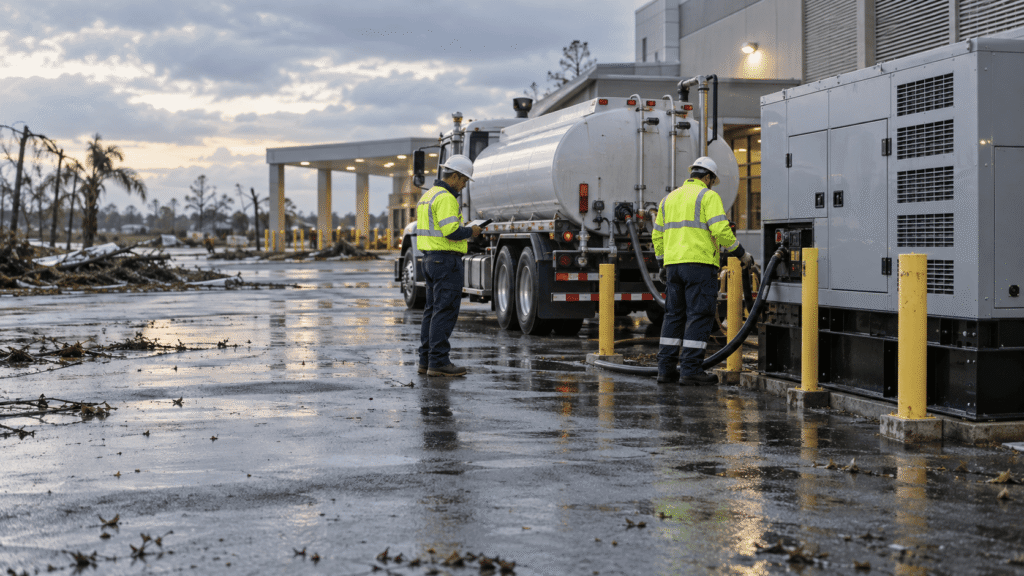
Fuel is easy to overlook when an emergency response is being planned. The focus often begins with generators, vehicles, equipment, facilities, and personnel. But those resources depend on a practical fuel plan if operations must continue while utilities, roads, or local supply systems are disrupted.
Fuel logistics in disaster response connects equipment readiness with sustained field operations. It includes estimating requirements, identifying supply options, planning storage and delivery, coordinating access, monitoring use, and preparing for changing conditions. The objective is not simply to deliver fuel once. It is to help ensure that critical operations have a reliable support process for as long as the emergency requirement continues.
For organizations relying on temporary power, emergency transportation, communications, response facilities, or other field resources, fuel logistics should be part of the deployment plan from the beginning.
Why Fuel Is Central to Disaster Response
Disaster areas can face power outages, damaged roads, fuel shortages, supply-chain interruptions, traffic restrictions, severe weather, and competing demand from multiple response organizations. These conditions can make ordinary fuel access more difficult and less predictable.
Fuel may support:
- Temporary generators
- Emergency operations centers
- Shelters and support facilities
- Water and wastewater operations
- Medical and public-service activities
- Communications and field equipment
- Transportation and delivery vehicles
- Maintenance and recovery crews
Each use has its own operating pattern and support requirements. A plan that works for a single facility may not be sufficient for several distributed sites. Understanding the operational priority helps teams decide how fuel should be sourced, stored, delivered, monitored, and replenished.
What Fuel Logistics in Disaster Response Includes
fuel logistics is a coordinated process rather than a single delivery. It connects planning and procurement with transportation, site management, safety, documentation, and ongoing communication.
Requirement Planning
The team should identify which equipment and activities require fuel, how they are expected to operate, and what conditions could change their use. Estimates should be treated as planning information rather than permanent numbers because site loads, operating hours, weather, and mission priorities can change.
Supply Coordination
Response teams may need to coordinate with fuel suppliers, transportation providers, site representatives, emergency managers, facility operators, and other response partners. Clear responsibilities help define who is requesting fuel, who is approving it, who is receiving it, and who is monitoring the available supply.
Storage and Handling
Fuel storage and handling should follow the site’s requirements, applicable procedures, and qualified guidance. The plan should consider location, access, security, environmental conditions, spill prevention, transfer procedures, and protection from traffic or other site hazards.
Delivery and Replenishment
Fuel delivery must account for route conditions, vehicle access, unloading space, delivery timing, site contacts, and changing priorities. Replenishment should be planned before the supply becomes critical, especially when access could be restricted or delivery capacity could be limited.
Monitoring and Documentation
Teams need visibility into fuel received, fuel used, remaining supply, upcoming requirements, delivery status, and issues that could affect operations. Accurate records help decision-makers identify risks early and support closeout after the response.
Fuel Planning for Temporary Power
temporary generators are often deployed when normal utility service is unavailable or unreliable. The generator provides an important resource, but its operation depends on fuel, connection, distribution, maintenance, monitoring, and site coordination.
Start With the Priority Loads
The site should identify the functions that must remain operational. These may include essential facility systems, emergency operations, communications, water-related activities, or other critical services. Understanding the priority loads helps inform the temporary power plan and the expected operating pattern.
Consider the Complete Operating Arrangement
Fuel requirements are affected by the equipment configuration and how it will be used. The plan may need to consider generator size, expected load, operating schedule, environmental conditions, fuel storage, access, and support resources. The goal is to connect the fuel plan to the actual operating arrangement rather than treating fuel as a separate administrative task.
Establish a Resupply Process
A resupply process should define how fuel needs are identified, who submits a request, how the request is prioritized, where delivery occurs, and how receipt is documented. This process should be understood by the facility, field team, logistics coordinator, and other responsible contacts. For longer deployments, the team should also consider how changing access, weather, supply availability, and site operations could affect replenishment.
Transportation Challenges After a Disaster
Moving fuel into an affected area can involve challenges that are not present during normal operations. Roads may be blocked, bridges may be restricted, traffic may be redirected, or the delivery point may be difficult for a fuel vehicle to reach.
Confirm the Final Delivery Location
The facility address may not identify the best delivery point. Before movement, the team should confirm the entrance, route, turning area, unloading location, ground conditions, clearance, security requirements, and contact responsible for receiving the delivery.
Plan Alternate Options
Conditions can change while fuel is in transit. A response plan should account for possible route changes, access restrictions, weather, and delays. Alternate delivery arrangements may involve a different entrance, staging location, delivery window, or coordination point.
Coordinate With Site Activity
Fuel delivery often takes place while equipment, vehicles, personnel, and public activity are already operating at the site. Coordinating timing, access, traffic movement, and responsible personnel helps reduce avoidable disruption and supports safe handling.
Communication and Coordination
Fuel logistics depends on information moving between the people who plan, deliver, receive, use, and monitor the supply. A delay in one part of the communication chain can affect equipment operation or the wider response.
Define Points of Contact
The deployment should identify contacts for:
- The affected facility
- The fuel supplier or delivery provider
- The equipment or generator team
- The transportation or staging team
- Emergency-management or government partners
- Safety and site operations
- Fuel monitoring and documentation
The exact participants vary by assignment, but each responsibility should have a clear owner.
Use Decision-Focused Updates
Useful fuel status updates should communicate what has been requested, what is in transit, what has arrived, what remains available, what is expected next, and what could affect the plan. Keeping updates practical helps decision-makers respond before a supply issue becomes an operational interruption.
Document Changes
Requests, approvals, deliveries, receipts, inspections, usage records, and changes to the fuel plan should be documented. A clear record supports coordination during the incident and helps explain the deployment afterward.
Security, Safety, and Site Conditions
Fuel is an operational resource, but it also introduces handling, storage, environmental, and security considerations. The response team should coordinate with qualified personnel and follow site-specific and applicable requirements.
Important considerations may include:
- Safe placement of storage and transfer equipment
- Protection from vehicle traffic and unauthorized access
- Spill prevention and response procedures
- Clear separation from ignition sources and incompatible activities
- Weather and environmental exposure
- Emergency access and site egress
- Inspection and documentation
- Communication during delivery and transfer
These considerations should be built into the deployment plan rather than addressed only when fuel arrives at the site.
sustaining fuel support during a long deployment
The longer a response continues, the more important it becomes to maintain reliable visibility and coordination. A one-time delivery may support the initial setup, but sustained operations require a process for monitoring needs and arranging additional support.
Review Usage Against the Operating Plan
Actual fuel use may differ from the initial estimate because of load changes, weather, operating schedules, equipment changes, or new site priorities. Regular review helps the team adjust the plan based on current conditions.
Coordinate Multiple Locations
When several facilities or response sites require support, the team may need to prioritize deliveries, track separate inventories, and coordinate routes across the deployment area. Centralized visibility can help reduce confusion and identify locations that need attention.
Prepare for Transition
Fuel planning should also account for changes in the emergency operation. A site may return to utility service, reduce its temporary power requirement, move equipment, or transition to another operating arrangement. The fuel plan should be updated as the deployment moves toward demobilization.
Common Fuel Logistics Mistakes to Avoid
Several avoidable issues can complicate a disaster response:
- Treating fuel as an afterthought after equipment is selected
- Using a generic estimate without considering site conditions
- Failing to confirm the actual delivery and unloading location
- Waiting until supply is nearly exhausted to request replenishment
- Leaving fuel responsibilities unclear between teams
- Overlooking storage, access, security, and handling requirements
- Failing to document deliveries and remaining supply
- Ignoring how route or weather changes affect resupply
- Planning initial delivery without planning demobilization
These risks do not always result from a lack of effort. They often appear when fuel planning is separated from the wider equipment and field-operations plan.
Building a Practical Emergency Fuel Plan
Organizations can improve readiness by documenting fuel requirements before an incident and reviewing them as part of emergency preparedness. A practical plan may include:
- Critical sites and priority functions
- Equipment and vehicles that require fuel
- Expected operating patterns
- Storage and handling requirements
- Delivery access and alternate routes
- Supplier and transportation contacts
- Fuel request and approval procedures
- Monitoring and documentation responsibilities
- Security and site-safety considerations
- Replenishment triggers and communication procedures
- Transition and demobilization criteria
Preparedness does not remove the uncertainty of a disaster, but it gives response teams a clearer framework for decisions when normal supply channels are under pressure.
How Rapid Emergency Deployment Supports Fuel Coordination
Rapid Emergency Deployment focuses on the practical needs of emergency response, including temporary power, equipment deployment, logistics, field operations, and coordination for critical situations.
Fuel is an essential part of that operating picture. It must be considered alongside equipment selection, site access, transportation, power distribution, communication, monitoring, and the expected duration of the assignment.
If your organization is preparing for a possible disruption or coordinating an active emergency response, contact Rapid Emergency Deployment to discuss the operational need, temporary power requirements, site conditions, fuel considerations, and support planning.
Conclusion
Fuel logistics can make or break disaster response because equipment and field operations depend on more than initial delivery. Supply coordination, storage, transportation, monitoring, replenishment, communication, safety, and transition planning all contribute to a sustainable response.
By treating fuel as part of the deployment lifecycle from the beginning, organizations can make better decisions about temporary power, critical facilities, field teams, and recovery. A clear fuel plan helps connect the resources at the staging area with the operations that need to continue at the affected site.
Frequently Asked Questions About Fuel Logistics
What is fuel logistics in disaster response?
Fuel logistics in disaster response is the planning and coordination of fuel supply, storage, transportation, delivery, monitoring, replenishment, and closeout for generators, vehicles, facilities, and field operations.
Why is fuel important for temporary power deployments?
Temporary generators depend on fuel to operate while utility service is unavailable or unreliable. Fuel planning should be coordinated with equipment selection, expected loads, operating schedules, storage, access, monitoring, and resupply.
What should be included in an emergency fuel plan?
An emergency fuel plan may include equipment and vehicle requirements, expected operating patterns, storage and handling, delivery access, supplier contacts, request procedures, monitoring responsibilities, safety considerations, replenishment triggers, and demobilization criteria.
How do disaster conditions affect fuel delivery?
Blocked roads, damaged bridges, flooding, severe weather, traffic restrictions, security requirements, and limited unloading space can affect fuel delivery. Teams should confirm the actual delivery location and review routes as conditions change.
Who coordinates emergency fuel deliveries?
Coordination may involve facility representatives, fuel suppliers, transportation providers, equipment teams, emergency managers, government or public-sector contacts, safety personnel, and logistics coordinators. Responsibilities should be clearly assigned for each deployment.
How is fuel monitored during a long emergency deployment?
Teams can monitor fuel received, fuel used, remaining supply, delivery status, upcoming requirements, and issues that may affect operations. Regular updates help identify replenishment needs before they become urgent.
What safety factors should be considered for emergency fuel logistics?
Plans should consider storage location, transfer procedures, spill prevention, security, vehicle traffic, weather exposure, ignition sources, emergency access, site egress, inspections, and qualified guidance appropriate to the site.
When should fuel replenishment be arranged?
Replenishment should be planned before the available supply becomes critical. Timing depends on expected use, access, delivery conditions, supplier availability, equipment operation, and changing site priorities.
How should fuel logistics be handled during demobilization?
The team should coordinate remaining fuel, storage, equipment shutdown, removal or transfer, documentation, site restoration, and the next operating arrangement before the deployment is closed out.