
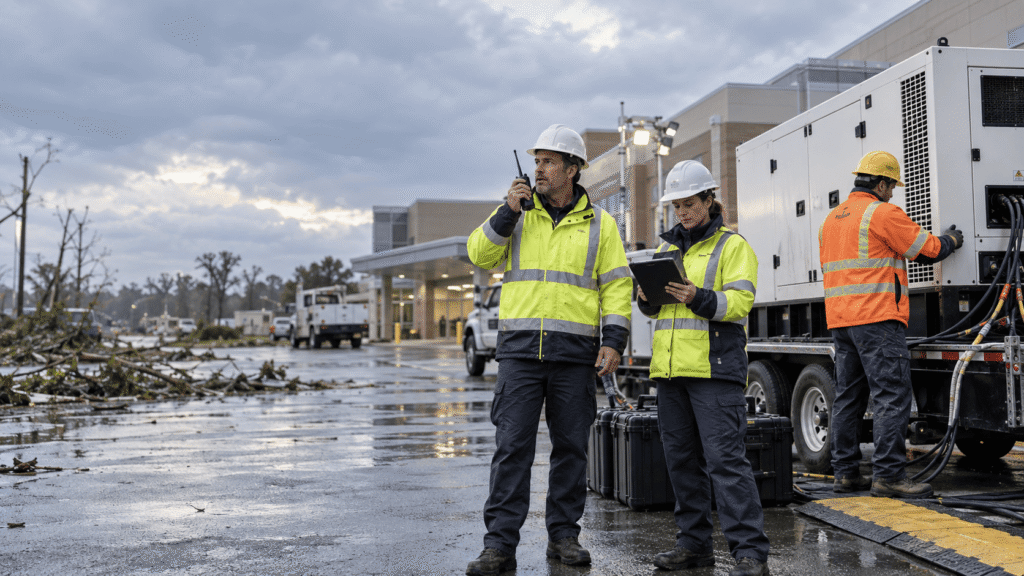
When a disaster affects roads, power, facilities, and normal communication channels, response teams still need to make decisions and share information. Equipment must be delivered, sites must be accessed, fuel must be coordinated, safety issues must be communicated, and changing priorities must reach the people responsible for acting on them.
That is why emergency communications during disaster response are more than a convenience. They are part of the operating structure that connects field teams, facilities, logistics providers, emergency managers, government contacts, and decision-makers.
A practical communication plan helps the response team understand what is happening, what has changed, what is needed next, and who is responsible for the next action.
Why Communication Matters During a Disaster
Disaster response conditions can change quickly. A road may become inaccessible, a delivery location may change, a generator may require additional fuel, or a facility may need to adjust its operating priorities. Without a reliable way to share those changes, even well-prepared teams can lose time or work from outdated information.
Emergency communications support:
- Field-team coordination
- Equipment and generator deployment
- Fuel delivery and replenishment
- Facility and site access
- Safety and security updates
- Transportation and staging
- Emergency operations
- Status reporting and decision-making
- Demobilization and recovery
The goal is not to create more messages. The goal is to make sure the right information reaches the right people in a form they can use.
What Emergency Communications During Disaster Response Include
Emergency communications can include radio systems, phone calls, text messages, email, digital platforms, in-person briefings, written logs, and other approved channels. The right combination depends on the incident, the location, the available infrastructure, and the responsibilities of the response team.
Operational communications
Operational communication covers the immediate information needed to perform the work. Examples include arrival instructions, equipment status, site readiness, route changes, fuel needs, access restrictions, and safety concerns.
Coordination communications
Coordination connects different teams and organizations. A facility may need to communicate with an equipment provider, a fuel supplier, a transportation team, an emergency-management contact, and a technical representative at the same time.
Decision and escalation communications
Some conditions require a decision beyond the field team. The communication plan should identify how issues are escalated, who has authority to decide, and what information should accompany the request.
Documentation communications
Records of requests, approvals, deliveries, changes, inspections, and handoffs help maintain visibility during the response. They also support closeout and after-action review.
1. Establish a Communication Structure Before the Incident
The best time to decide how teams will communicate is before a disaster creates pressure. A preparedness plan should identify primary and alternate channels, responsible contacts, escalation paths, and the information that must be reported.
Create a contact list
The contact list may include:
- Facility and property representatives
- Emergency-management contacts
- Government or public-sector partners, when applicable
- Equipment and temporary-power teams
- Fuel suppliers and delivery providers
- Transportation and staging contacts
- Safety and security personnel
- Technical or electrical representatives
- Leadership and escalation contacts
Keep the list current and make sure responsible personnel know where to find it.
Define the communication hierarchy
Teams should understand which information stays within the field group, which information goes to the site lead, and which conditions must be escalated to a broader response structure. This reduces uncertainty and helps prevent important issues from being lost in general updates.
Identify backup channels
If the primary channel is unavailable, the team should know what to use next. Backup options may include a different device, a different network, in-person runners, scheduled check-ins, or another approved method. The plan should reflect what is actually available to the organization.
2. Use Clear and Consistent Status Updates
During a fast-moving response, updates should be concise and action-oriented. A useful status update answers a few basic questions:
- What happened?
- Where did it happen?
- What is the current impact?
- What action has been taken?
- What is needed next?
- Who is responsible?
- When is the next update expected?
For equipment and logistics, an update may state what has been dispatched, where it is located, whether the site is ready, what remains outstanding, and whether the plan has changed.
Consistency makes updates easier to compare and helps decision-makers recognize the difference between information, a request, a warning, and an approval.
3. Coordinate Equipment and Temporary Power
Emergency communications are closely connected to equipment deployment. A generator or other critical resource cannot be treated as delivered simply because it has left the staging area. The receiving site needs to know what is arriving, when it is expected, where it should be placed, and who will coordinate the handoff.
Communication may be needed to confirm:
- The delivery route and site entrance
- Unloading and placement conditions
- Connection and distribution requirements
- Equipment arrival and condition
- Fuel availability and resupply
- Operating status
- Technical or safety questions
- Changes to the facility’s priority loads
Keeping these updates connected helps the field team and facility team work from the same operating picture.
4. Support fuel and logistics coordination
Fuel support requires communication before, during, and after delivery. The logistics team may need to coordinate requests, approvals, supplier availability, routes, unloading space, storage, monitoring, and replenishment.
A fuel update should make clear what has been requested, what is in transit, what has arrived, what remains available, and what could affect the next delivery. This is especially important when several locations require support or when access and supply conditions are changing.
The same approach applies to other resources. Equipment, tools, supplies, vehicles, and personnel all benefit from clear assignment, status, and handoff information.
5. Keep Safety Information Moving
Safety communication should be specific enough to support action. Teams may need to communicate damaged infrastructure, unstable ground, blocked access, traffic movement, weather changes, fuel-transfer concerns, equipment placement issues, or other hazards.
Important safety updates should identify the location, condition, immediate risk, control measure, and person responsible for follow-up. If a hazard changes the deployment plan, that change should be shared with everyone affected by the decision.
Communication does not replace qualified safety or technical judgment. It helps make sure those responsible for the judgment have timely and accurate information.
6. Coordinate With Government and Emergency Teams
Many deployments involve more than one organization. Facility operators, public agencies, emergency managers, contractors, transportation providers, and equipment teams may each have different responsibilities and reporting expectations.
Communication should align with the response structure already in place. The team should understand who authorizes work, who controls site access, who receives equipment, who manages the operating location, and how status information is shared.
When responsibilities are unclear, the issue should be escalated early rather than left to assumption. Clear coordination helps reduce conflicting instructions and makes it easier to adapt when priorities change.
7. Maintain Communication Across Multiple Sites
Large or distributed responses may involve several facilities, staging points, delivery routes, or field teams. The response structure should provide both local and overall visibility.
Local visibility
Each site needs enough information to manage its own operation: equipment status, access, fuel, safety, staffing, and immediate needs.
Overall visibility
The wider response team needs to understand priorities across locations, available resources, pending deliveries, constraints, and issues requiring escalation.
A shared status format, site naming system, and regular reporting schedule can help teams combine local updates into a useful overall picture.
8. Communicate During Sustained Operations
The initial response is only one phase of an emergency deployment. Temporary power, field equipment, and support operations may continue while utilities and infrastructure are being restored.
During sustained operations, teams should continue to communicate:
- Operating status
- Fuel and supply levels
- Equipment condition
- Site access
- Changes in load or facility priority
- Weather and security conditions
- Requests for technical or logistical support
- Transition and demobilization planning
Regular updates help prevent the response from becoming reactive. They also give decision-makers time to adjust support before a problem becomes an interruption.
9. Document the Communication Record
Documentation is especially important when many people and organizations are involved. A communication record can capture requests, approvals, decisions, changes, handoffs, deliveries, safety concerns, and unresolved issues.
The record does not need to include every informal conversation. It should preserve the information needed to understand what was decided, when it was decided, who was responsible, and what happened afterward.
This record can support operational continuity, accountability, transition planning, and after-action improvement.
Common Emergency Communication Problems
Organizations can encounter several communication challenges during disaster response:
- Outdated contact lists
- Unclear responsibility for decisions
- Too many channels with no defined priority
- Incomplete location or equipment information
- Updates that do not identify an owner or next action
- Field and leadership teams working from different information
- Changes not communicated to every affected team
- No backup communication method
- Poor documentation of decisions and handoffs
These issues are often addressed through preparation, simple communication standards, defined roles, and regular review.
Building a Practical Emergency Communications Plan
A useful plan can include:
- Primary and backup communication channels
- Current contact and escalation lists
- Site names, locations, and access instructions
- Equipment and fuel status formats
- Scheduled check-in times
- Decision and approval responsibilities
- Safety reporting procedures
- Documentation and recordkeeping expectations
- Multi-site reporting requirements
- Transition and demobilization communication
The plan should be tested or reviewed before hurricane season, severe-weather periods, or other conditions that could disrupt normal operations.
How Rapid Emergency Deployment Supports Response Coordination
Rapid Emergency Deployment focuses on practical emergency-response needs, including temporary power, equipment deployment, logistics, field operations, and coordination for critical situations.
Communication connects those activities. It helps teams coordinate equipment movement, fuel and logistics coordination, site access, operating status, safety information, and the transition toward recovery.
If your organization is preparing for a possible disruption or coordinating an active emergency response, contact Rapid Emergency Deployment to discuss the operational need, site requirements, communication structure, and support considerations.
Conclusion
Emergency communications during disaster response help connect the people, equipment, sites, and decisions that make an operation possible. Clear communication supports mobilization, transportation, temporary power, fuel, safety, multi-site coordination, sustained operations, and recovery.
The goal is not to communicate more. It is to communicate clearly, consistently, and early enough for the response team to act. A practical plan gives everyone a better understanding of what is happening, what needs attention, and what comes next.
Frequently Asked Questions About Emergency Communications
What are emergency communications during disaster response?
Emergency communications are the approved channels, procedures, contacts, and reporting practices used to coordinate field teams, facilities, equipment, fuel, safety, logistics, and decisions during a disaster response.
Why are communications important during a disaster?
Disaster conditions can change quickly. Clear communications help teams share route changes, equipment status, fuel needs, safety concerns, site access information, and decisions before those changes create larger operational problems.
What should be included in an emergency communications plan?
An emergency communications plan may include primary and backup channels, current contact lists, escalation paths, site information, status formats, check-in schedules, decision responsibilities, safety reporting, documentation, and transition procedures.
How do communications support temporary generator deployment?
Communication helps teams confirm the delivery route, site readiness, unloading area, equipment placement, connection requirements, fuel support, arrival status, operating condition, and technical or safety needs.
How are fuel deliveries coordinated during disaster response?
Teams communicate fuel requests, approvals, supplier availability, routes, unloading details, delivery status, remaining supply, replenishment needs, and conditions that could affect future deliveries.
Who should be included in disaster response communications?
Depending on the assignment, participants may include facility representatives, emergency managers, government or public-sector partners, equipment teams, fuel suppliers, transportation providers, safety personnel, technical representatives, and leadership contacts.
How can teams communicate when normal systems are unavailable?
Teams should use the backup channels identified in their plan, which may include alternate devices or networks, scheduled check-ins, in-person communication, or another approved method appropriate to the situation.
What makes an emergency status update useful?
A useful update identifies what happened, where it happened, the current impact, action already taken, what is needed next, who is responsible, and when the next update is expected.
Why should disaster communications be documented?
Documentation preserves requests, approvals, decisions, changes, handoffs, deliveries, safety concerns, and unresolved issues. It supports coordination during the response and review after the operation.