
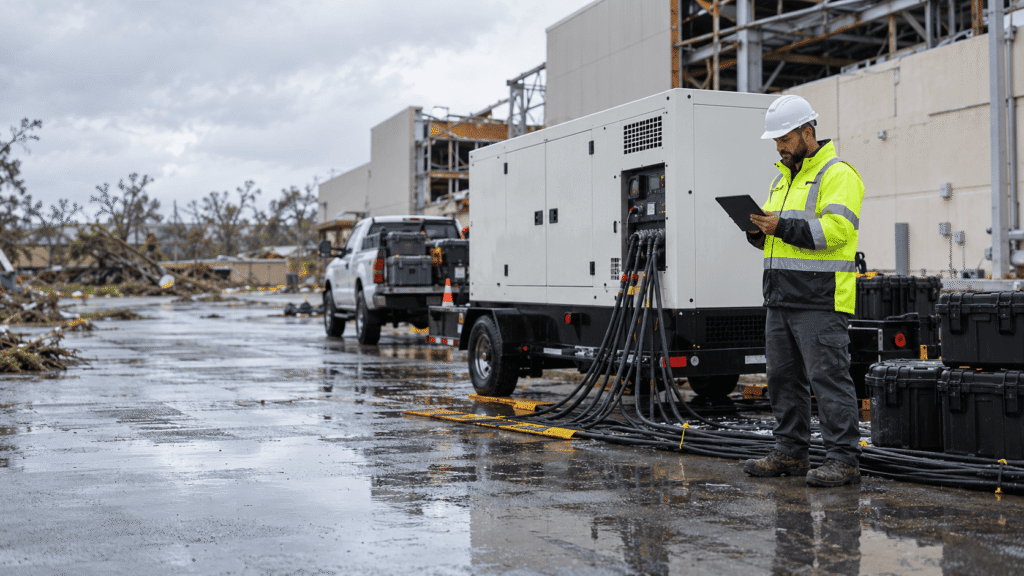
During a disaster deployment, conditions can change quickly. A road that was open in the morning may become difficult to access later. A facility’s priorities may shift. Temporary power equipment may arrive while site teams are still assessing damage. New safety concerns may affect where people and vehicles can work.
In that environment, clear information is an operational resource.
Disaster response documentation helps teams record what they observe, what they decide, what has been completed, and what still requires attention. It gives field personnel, facility representatives, logistics teams, and emergency partners a shared reference point when the response is moving quickly.
Good documentation does not need to be complicated. It needs to be accurate, timely, understandable, and connected to the decisions the team is making.
Why Disaster Response Documentation Matters
Emergency operations often involve multiple people working across different locations and shifts. Without a reliable record, important information can remain in one person’s memory, get lost during a handoff, or be repeated inconsistently.
Disaster response documentation can help teams:
- Understand current site conditions
- Track equipment and logistics activity
- Record changes to access, priorities, or operating conditions
- Communicate concerns to the appropriate contact
- Support shift and team handoffs
- Identify open actions and pending decisions
- Create a record for recovery and demobilization
Documentation does not remove uncertainty from a disaster. It helps the team manage uncertainty with a clearer view of what is known and what still needs to be confirmed.
What Should Field Reports Capture?
A field report should focus on information that affects the response. The exact format may vary by organization, facility, or deployment, but a practical report often includes the following.
Time and Location
Record when the observation or activity occurred and where it took place. Specific location details are especially useful when a site has multiple buildings, access points, staging areas, or equipment locations.
Conditions Observed
Describe relevant conditions such as blocked access, standing water, debris, weather changes, traffic restrictions, visible equipment concerns, or changes to the work area.
Work Completed
Note what was delivered, inspected, staged, connected, communicated, or otherwise completed. Clear completion notes help distinguish finished actions from planned actions.
Open Issues
Record concerns that still require attention. An open issue should identify the general problem, the responsible contact if known, and the next expected action.
Decisions and Approvals
When a change in plan is made, document the decision and the relevant context. This can help later teams understand why equipment was relocated, access was changed, or work was sequenced differently.
Next Steps
End with the actions that need to happen next. A short list of next steps can be more useful than a long narrative with no clear ownership.
Documenting temporary power operations
Temporary power deployments show why field reporting is important. A generator may be delivered to a facility, but its role in the operation continues through placement, coordination, monitoring, fuel planning, maintenance, and demobilization.
Records may help the team track:
- Equipment location and deployment status
- Site access and staging conditions
- Relevant communication with facility representatives
- fuel coordination and upcoming logistics needs
- Inspection or service observations
- Changes affecting the operating environment
- Open technical or safety concerns
- Transition and removal planning
The record should not replace manufacturer instructions, electrical requirements, safety procedures, or qualified technical judgment. Instead, it helps the operational team communicate around those requirements.
Use Facts, Not Assumptions
Emergency documentation is most useful when it separates observation from interpretation.
For example, “water is visible near the access route” is a direct observation. “The route is unusable” is a conclusion that may require confirmation. A strong report can record both, but it should make the distinction clear.
Useful field language is:
- Specific rather than vague
- Descriptive rather than emotional
- Time-stamped rather than generalized
- Clear about what is confirmed and what is pending
- Focused on operational relevance
Avoid unsupported claims, speculation, blame, or details that do not help the response team make a decision. A report should help people understand the situation, not create a second problem through confusion.
Keep Communication Connected to the Record
Reports and communications work best together. A radio call, phone conversation, text message, or in-person update may address an urgent issue, but important outcomes should be captured in the agreed record when appropriate.
For significant updates, the team may want to record:
- Who provided the information
- Who received it
- What changed
- What action was agreed
- Whether another team needs to be notified
This does not mean documenting every conversation word for word. It means preserving the information that affects coordination, safety, equipment, access, or next steps.
Equipment and Logistics Records
Disaster operations often involve equipment moving through several stages: mobilization, transport, staging, deployment, operation, service, and recovery. A basic record can help the team understand where an item is in that process.
Useful logistics details may include:
- Equipment description or internal identifier
- Current location or staging area
- Delivery or movement status
- Contact responsible for the next action
- Access limitations or transport concerns
- Supporting items still required
- Return, transfer, or demobilization status
The level of detail should match the operation. The purpose is not to create paperwork for its own sake. It is to reduce uncertainty when people, vehicles, equipment, and information are moving at the same time.
Handoffs Are a Documentation Test
A good handoff should allow a new team member to understand the current situation without depending entirely on an informal conversation.
At a minimum, a handoff can cover:
- What has happened
- What is currently operating
- What has changed
- What remains open
- What decision or action comes next
- Who owns that next step
If the record cannot answer those questions, the team may need a clearer reporting format or a more consistent update routine.
Documentation and Coordination With Emergency Teams
Disaster response may involve facility leaders, local authorities, emergency-management personnel, utility representatives, contractors, logistics providers, and other organizations. Each group may use different terminology or have different reporting expectations.
A practical documentation process should clarify:
- Which updates need to be shared externally
- Who is authorized to provide operational information
- Which issues require escalation
- Where the current record is maintained
- How conflicting or outdated information is corrected
The process should protect sensitive information and follow the organization’s privacy, security, and records requirements. Do not include private personal information or unnecessary identifying details in field notes.
Use Photos Carefully
Photos can help document site conditions, equipment placement, access routes, and visible changes. They should be taken only when permitted and in accordance with site safety, privacy, and security procedures.
Before sharing an image, the team should consider whether it includes:
- Private information
- Readable screens or documents
- Personal identifying details
- Security-sensitive layouts
- License plates or restricted areas
- Unsafe activity that could be misunderstood without context
Images should support the record, not replace a clear written description.
from response to recovery
Documentation remains useful after the immediate emergency has passed. Recovery teams may need to understand the sequence of events, equipment used, unresolved issues, temporary measures, and transition decisions.
During demobilization, records can support:
- Confirmation that equipment was removed or transferred
- Communication about the return to permanent systems
- Identification of remaining work
- Review of access, fuel, or service concerns
- Internal lessons learned
- Updates to future emergency plans
The goal is not to create a perfect historical record. It is to preserve enough reliable information to support the next operational decision and improve future preparedness.
A Simple Field-Reporting Framework
Organizations can review their disaster documentation process with five questions:
- What information does the response team need to make decisions?
- Who is responsible for recording and sharing it?
- Where is the current version of the record kept?
- How are urgent issues escalated?
- How is the record handed to recovery personnel?
The answers should be practical for the field conditions. A short, consistent form that people actually use is more valuable than a complex process that slows down or disappears during a response.
Conclusion
Disaster response documentation is part of operational readiness. It helps teams connect observations to decisions, equipment to responsibilities, and immediate actions to recovery planning.
Clear field reporting can support temporary power operations, equipment logistics, site access, communications, staffing, and demobilization. It gives teams a common reference when conditions are changing and different people are working across the response.
Rapid Emergency Deployment focuses on practical emergency power, logistics, and field operations for organizations reviewing their disaster-response documentation and temporary power planning.
Frequently Asked Questions
What is disaster response documentation?
Disaster response documentation is the organized recording of site conditions, decisions, equipment activity, communications, open issues, and next steps during an emergency operation.
Why is field reporting important during a disaster?
Field reporting gives response teams a shared reference for changing conditions, completed work, open concerns, handoffs, and next actions.
What should be included in an emergency field report?
An emergency field report should generally include the time and location, conditions observed, work completed, open issues, relevant decisions, responsible contacts, and next steps.
Should temporary generator activity be documented?
Yes. Teams may document equipment location, deployment status, access conditions, fuel coordination, inspections, operational concerns, communication, and demobilization planning as appropriate.
How can teams avoid inaccurate disaster reports?
Teams can use specific, time-stamped language, separate observations from assumptions, identify what is confirmed or pending, and avoid unsupported claims or speculation.
How does documentation support disaster recovery?
Documentation helps recovery teams understand what occurred, which temporary measures were used, what remains open, and how equipment or operations were transitioned.