
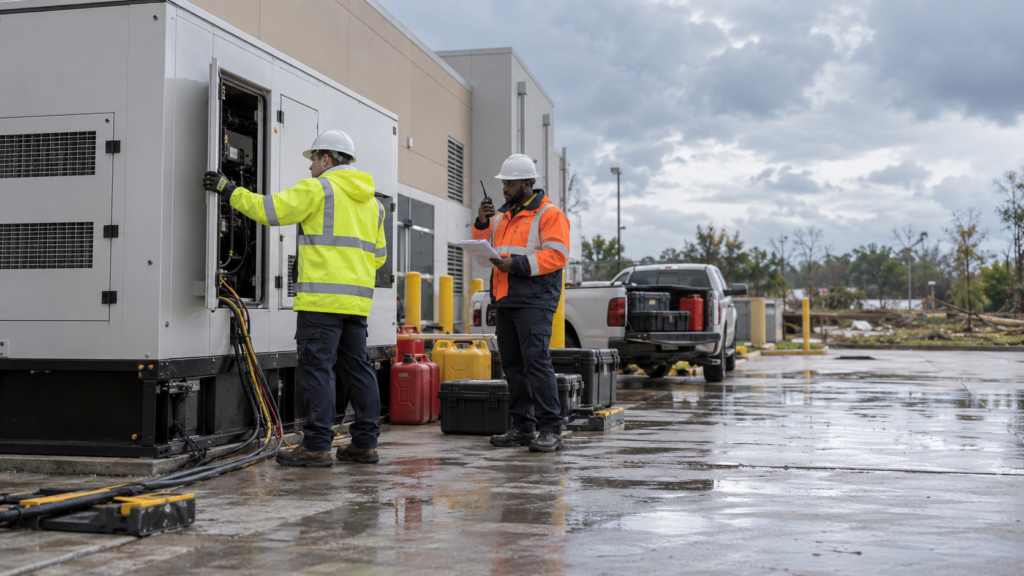
Temporary generators can help keep important facility operations moving when permanent power is disrupted. But delivering a generator is only one part of an emergency power response.
Once equipment is operating in the field, people must coordinate inspections, fuel planning, site access, communication, safety, and eventual demobilization. That is where emergency generator maintenance becomes part of the broader disaster-response plan.
Maintenance during an emergency is not simply a routine service visit. Conditions may be changing, access may be limited, and the equipment may be supporting operations that cannot easily pause. A clear process helps teams identify issues early, communicate changes, and keep responsibilities visible.
Why Emergency Generator Maintenance Matters During a Deployment
Normal maintenance routines are often built around predictable schedules and stable sites. Disaster operations are different. Equipment may be placed in temporary locations, exposed to rain or debris, surrounded by vehicle traffic, or operating while a facility team is also managing other hazards.
Emergency generator maintenance helps the response team coordinate practical questions such as:
- Is the equipment accessible for inspection and service?
- Are fuel levels and resupply plans being monitored?
- Have operating conditions changed at the site?
- Are cables, connections, ventilation, and surrounding areas being checked?
- Who receives and records operational updates?
- What is the process for escalating a concern?
- When can the equipment be safely removed or replaced?
The answers will vary by equipment, site, and deployment plan. The important point is that maintenance responsibilities should be defined before the operation becomes difficult to manage.
Maintenance Starts With a Clear Operating Handoff
The first maintenance step begins when the equipment is delivered and placed. A handoff should establish a shared understanding of the equipment, the site, and the responsibilities around it.
Depending on the deployment, the handoff may cover:
- Equipment identification and location
- Intended use and critical loads, as confirmed by the responsible site team
- Access routes for personnel and service vehicles
- Fuel storage or delivery arrangements
- Basic safety and site restrictions
- Primary and backup contacts
- Inspection and update expectations
- Known site conditions or limitations
A good handoff gives the next person enough information to understand what has been done, what still needs attention, and who should be contacted when conditions change.
Build Inspections Around Field Conditions
An inspection routine should reflect the actual environment, not only a generic checklist. A temporary generator at a dry, accessible facility may require a different focus from one operating near standing water, debris, unstable ground, or heavy vehicle movement.
Teams may need to coordinate checks involving:
The Surrounding Area
The area around the generator should remain suitable for safe access and operation. Debris, water, blocked paths, changing traffic patterns, or nearby work may affect how the equipment can be approached and monitored.
Connections and Visible Equipment Condition
Visible cables, connections, guards, and equipment surfaces may need to be reviewed according to the applicable operating and safety procedures. Any unusual condition should be documented and escalated through the agreed process.
Ventilation and Placement Concerns
Temporary equipment placement can be affected by nearby structures, blocked airflow, changing weather, or activity at the site. The team should keep placement-related concerns visible and coordinate changes with the responsible personnel.
Signs of Changing Operation
Unexpected sounds, odors, alarms, leaks, visible damage, or other unusual observations should not be ignored. Field personnel should follow the applicable safety procedures and contact the designated technical or site representative when a concern appears.
This article is not a substitute for the manufacturer’s instructions, electrical requirements, site safety rules, or qualified technical judgment. Those sources should guide the actual inspection and service process.
Fuel Planning Is Part of Maintenance Coordination
Fuel is closely connected to temporary power continuity. A generator may be operating normally, but the plan can still be vulnerable if fuel levels, delivery access, storage conditions, or resupply responsibilities are unclear.
Fuel coordination may include:
- Assigning responsibility for monitoring fuel status
- Confirming the expected delivery route and site access
- Coordinating deliveries around facility activity and safety restrictions
- Recording deliveries and relevant operating updates
- Communicating changes caused by road closures, weather, or site conditions
- Planning for handoffs between shifts or response teams
The specific fuel requirements depend on the equipment and operating conditions. Teams should use the equipment documentation and the deployment plan rather than relying on assumptions.
Communication Keeps Small Issues From Becoming Larger Gaps
Emergency operations often involve multiple organizations and changing personnel. A maintenance concern that is clear to one person may be incomplete when passed to another unless it is recorded and communicated consistently.
A practical update can include:
- What was observed
- When and where it was observed
- Whether operation was affected
- What immediate action was taken
- Who was notified
- What follow-up is required
These updates do not need to be complicated. The goal is to create a reliable record and make the next decision easier for the responsible team.
Coordinate Maintenance With the Facility Team
Temporary power equipment operates within a larger facility environment. Maintenance activity may affect access, work areas, security, traffic, noise, or other site operations.
Coordination with facility representatives can help the response team understand:
- Which areas require controlled access
- When maintenance activity can be performed
- Which loads or operations are most sensitive to interruption
- Where vehicles and service personnel can safely stage
- What changes have occurred since the original deployment
The facility team may also know about conditions that are not obvious from the generator location alone. Regular communication helps connect equipment activity with the facility’s broader priorities.
Plan for Extended Operations and Handoffs
Some emergency power deployments continue beyond the initial response period. When operations extend, the team should plan for personnel changes, new site conditions, fuel coordination, documentation, and communication across shifts.
An operational handoff should identify:
- Current equipment status
- Recent inspections or service activity
- Fuel status and upcoming needs
- Open concerns or pending decisions
- Changes to access or site conditions
- The next responsible contact
This information helps reduce dependence on one individual’s memory and makes the operation easier to continue when staffing changes.
Know When to Escalate a Concern
Not every observation requires the same response. Some issues may be documented for routine follow-up, while others may require the equipment to be isolated, the site area to be restricted, or technical personnel to be contacted immediately.
The escalation process should be established before a problem occurs. It should explain who has authority to make operational decisions, how safety concerns are reported, and how the facility team is informed.
Personnel should not improvise technical repairs or bypass safety procedures to keep equipment running. When conditions are uncertain, the safest next step is to follow the applicable instructions and involve qualified personnel.
Maintenance and Demobilization
Maintenance planning should also consider how the temporary deployment will end. Before equipment is removed, the team may need to coordinate the condition of the permanent system, confirm that temporary power is no longer required, communicate the transition, and plan access for removal.
Demobilization may include:
- Confirming the facility’s transition plan
- Coordinating a final status update
- Reviewing open maintenance or safety concerns
- Preparing equipment for transport
- Removing cables, fuel-related materials, and supporting supplies according to the applicable procedures
- Documenting the handoff and remaining follow-up
An organized exit protects the site from being left with unclear responsibilities or incomplete information.
A Practical Framework for Emergency Generator Maintenance
Organizations can review their temporary power plans with five questions:
- Who is responsible for monitoring the equipment?
- What conditions need to be inspected at the site?
- How will fuel, access, and service coordination be managed?
- How will concerns and handoffs be documented?
- What must be confirmed before the equipment is demobilized?
These questions do not replace technical procedures. They help make the operational structure around those procedures more visible.
Conclusion
Emergency generator maintenance is a coordination responsibility as much as a technical one. Temporary power equipment must be supported by clear inspections, fuel planning, communication, site coordination, safety escalation, and recovery planning.
When those responsibilities are defined, response teams are better positioned to understand changing conditions and manage the deployment from delivery through demobilization.
Rapid Emergency Deployment provides practical guidance and support related to emergency power, equipment logistics, and field operations. To discuss temporary power planning for a disaster-response situation, visit Rapid Emergency Deployment.
Frequently Asked Questions
What is emergency generator maintenance during disaster response?
Emergency generator maintenance is the organized inspection, monitoring, service coordination, fuel planning, and issue escalation required to support temporary generator operations during a disruption.
How often should a temporary generator be inspected?
Inspection frequency depends on the equipment, manufacturer guidance, operating conditions, site requirements, and deployment plan. The response team should follow the applicable technical and safety instructions rather than use a universal schedule.
Who is responsible for temporary generator maintenance?
Responsibility should be assigned in the deployment plan and coordinated between qualified technical personnel, the equipment provider or service team, and the facility representative as appropriate.
Why is fuel monitoring part of generator maintenance?
Fuel status affects planning for continued operation. Monitoring helps teams coordinate resupply, access, deliveries, and communication before fuel needs become an operational issue.
What should happen if a generator shows an unusual condition?
Personnel should follow the applicable safety procedures, document the observation, notify the designated contact, and involve qualified technical personnel. They should not improvise repairs or bypass safety controls.
Does maintenance planning include generator removal?
Yes. A complete temporary power plan should include the transition back to permanent systems, final status communication, equipment preparation, removal coordination, and any remaining follow-up.